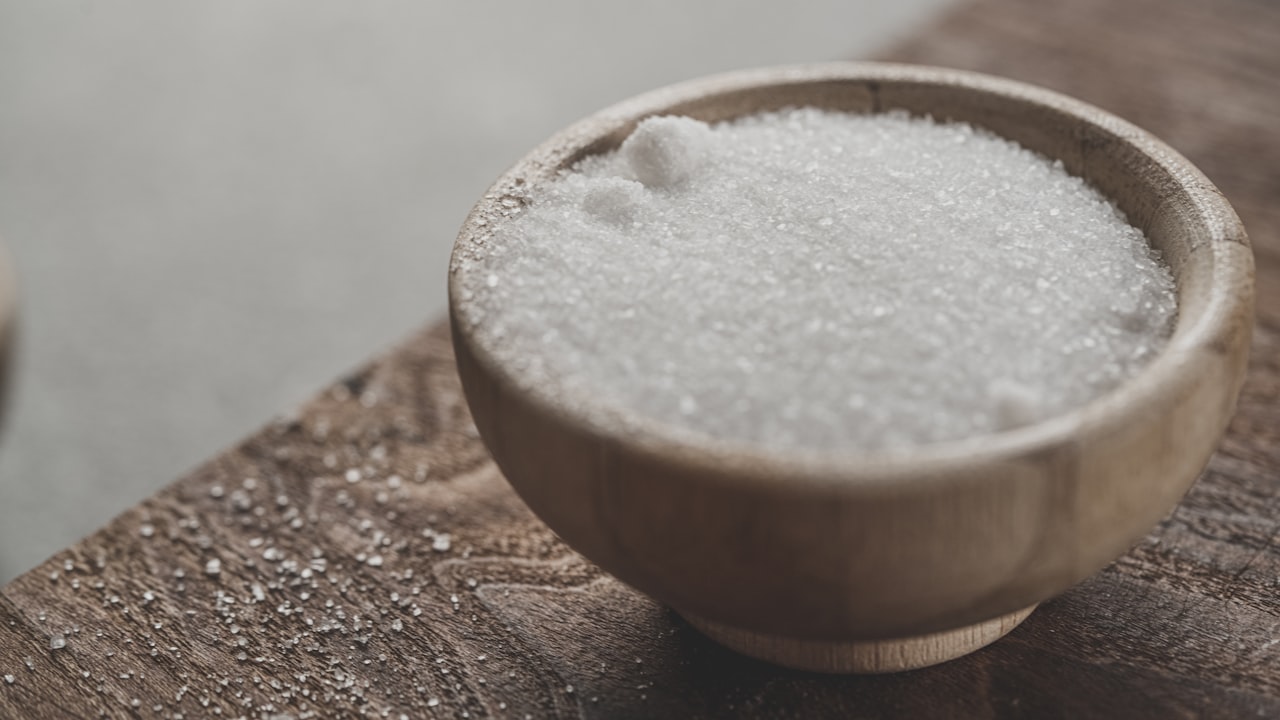
Sugar vs stevia vs erythritol — what to choose in a calorie deficit
A by-the-numbers breakdown of sugar and sweeteners — stevia, erythritol, fructose, sucralose, xylitol, aspartame. Calories, glycemic index, impact on a deficit, plus taste and gut-tolerance caveats.
Two myths cling to sweeteners: "sweeteners won't help you lose weight anyway" and "erythritol/stevia are harmful — plain sugar is better." Neither survives the numbers. Let's break down what actually affects a calorie deficit and what's just marketing and scare stories.
The principle is simple: for weight loss, what matters is calories and, secondarily, how a product affects blood sugar. We'll compare along those two axes.
Sugar (sucrose) — the baseline
~398 kcal / 100 g · GI ~65
1 teaspoon (5 g) = ~20 kcal of pure carbs. Sounds harmless until you count the habit: 4 cups of tea with 2 spoons each is already 160 kcal a day that almost no one logs. Over a month — close to 5,000 kcal "on the side."
Plus a high glycemic index: sugar spikes blood glucose fast and drops it just as fast — hence the appetite swings. For a deficit, sugar isn't bad because it's "toxic" — it's bad because it's easy to underestimate and hard to fit in.
Stevia — zero calories
0 kcal · GI 0
A natural sweetener from stevia leaves, 200-300× sweeter than sugar — so the actual serving is microscopic and its calories are negligible in practice. No effect on blood sugar at all.
One caveat: a faint grassy, slightly bitter aftertaste that not everyone likes. That's exactly why stevia is often sold blended with erythritol — it masks the aftertaste and restores the familiar "bulk" of sweetness.
Erythritol — the best bulk substitute for a deficit
~20 kcal / 100 g (≈0.2 kcal/g) · GI ~0
A sugar alcohol, about 70% as sweet as sugar. It's barely metabolized (mostly excreted via the kidneys), so it raises neither glucose nor insulin. For a deficit it's often the optimal pick: you can sweeten coffee, cottage cheese, or even baked goods with it — nearly calorie-free and in the usual volume (unlike stevia, which you dose in drops).
Caveat: in large amounts (roughly 30-40 g at once) it can have a laxative effect and cause bloating — the threshold varies per person. And a distinct cooling sensation in the mouth, like a mint.
What else shows up in ingredient lists
Fructose — ~399 kcal / 100 g, lower GI than sugar (~20), but exactly the same calories. No better than regular sugar for a deficit, even though "fructose" is often marketed as a healthy swap. It isn't.
Sucralose — ~0 kcal in practice, GI 0, heat-stable — so it's handy for baking. Made from sugar, but not metabolized.
Xylitol — ~240 kcal / 100 g, GI ~13. Almost 12× more calories than erythritol, so noticeably worse for a deficit. Important: lethally toxic to dogs even in small amounts — keep it away from pets.
Aspartame — ~0 kcal in practice, GI 0, but breaks down when heated, so it's not for hot baking. One of the most-studied sweeteners in the world; safe within approved limits.
So what to choose for a deficit
- Erythritol — when you want the usual volume (coffee, baking, desserts) nearly calorie-free.
- Stevia — when you want a clean zero and don't mind the aftertaste; great for drinks.
- Sucralose — for baking where heat stability matters.
- Sugar and fructose — count them as the regular carbs they are; not "forbidden," but logged.
"Brown sugar," cane, coconut — calorie-wise these are the same sugar, they just sound healthier. The difference in kcal per gram is a rounding error.
Where a deficit actually leaks
Not in the choice of sweetener, but in invisible sugar: spoons in tea and coffee, sauces (ketchup, teriyaki), granola and "fitness bars," flavored yogurts, café lattes. It's those unnoticed 100-300 kcal a day that most often eat the entire deficit.
In NutriApp, sugar and sweeteners are already in the database with correct values, and drinks and sauces are counted alongside food — so you immediately see how many kcal creep in "on the side." Save your usual coffee or yogurt as a template and log it with one tap.
So what's your pick — sugar, a sweetener, or off sweets entirely? Share it in the VK discussion.
Count calories automatically in NutriApp
Open NutriApp